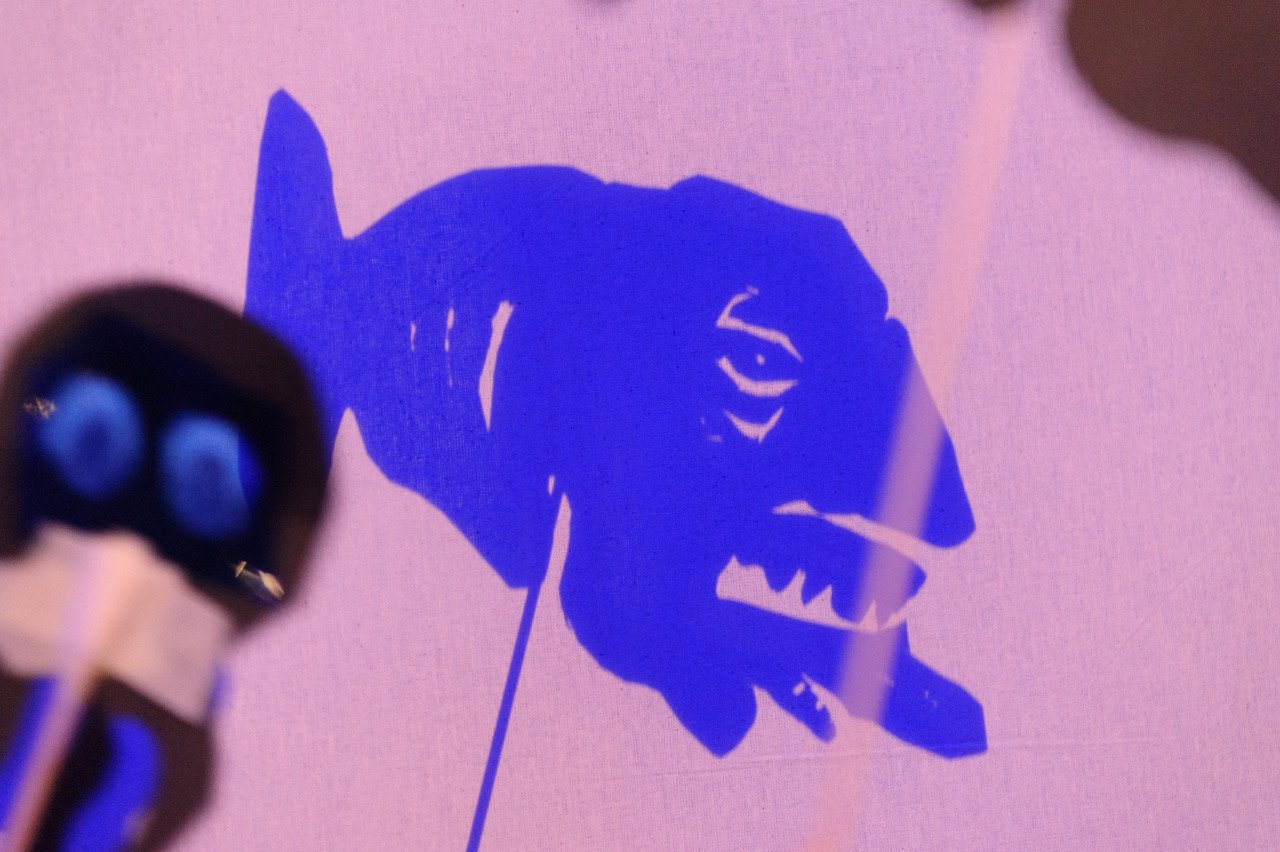
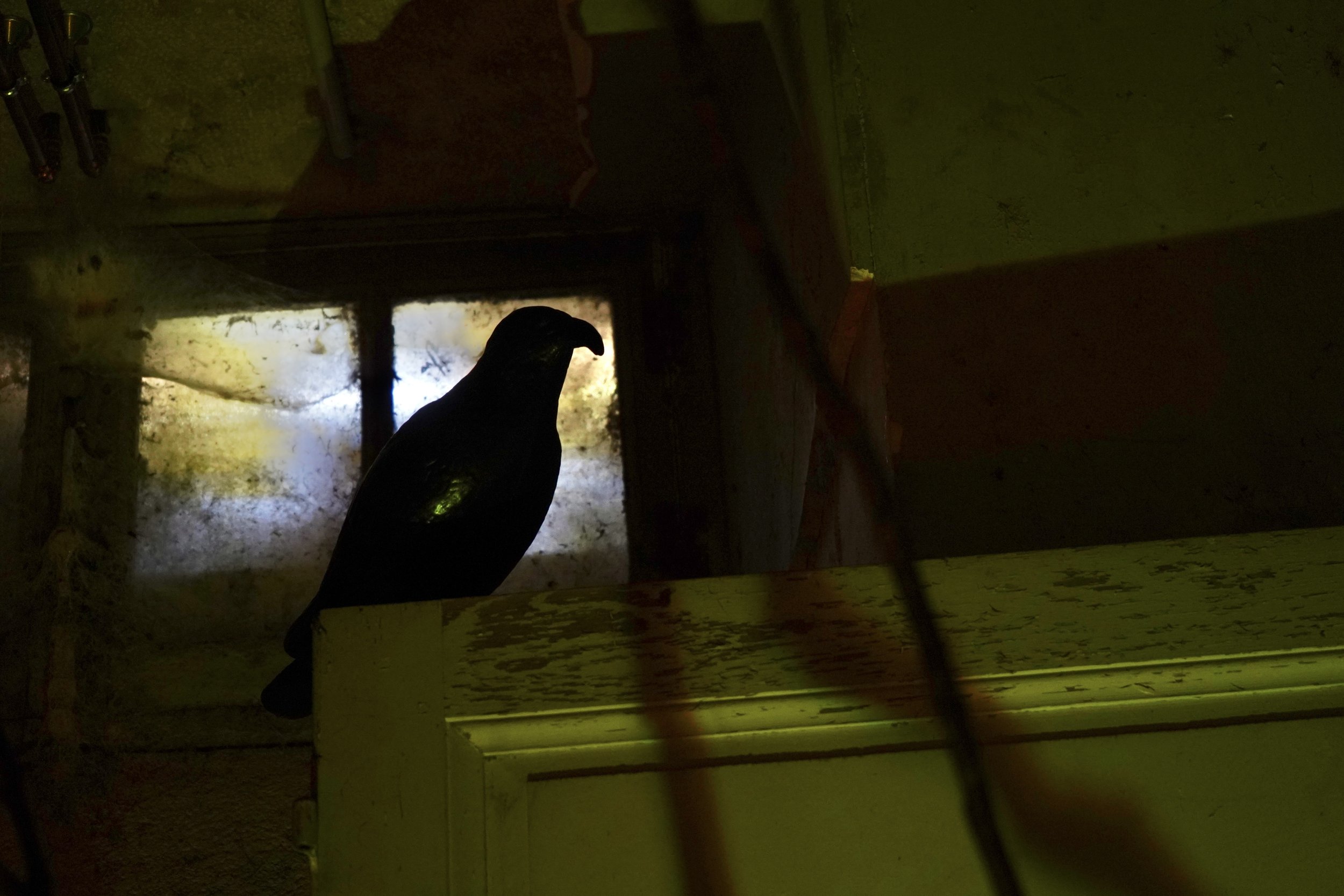
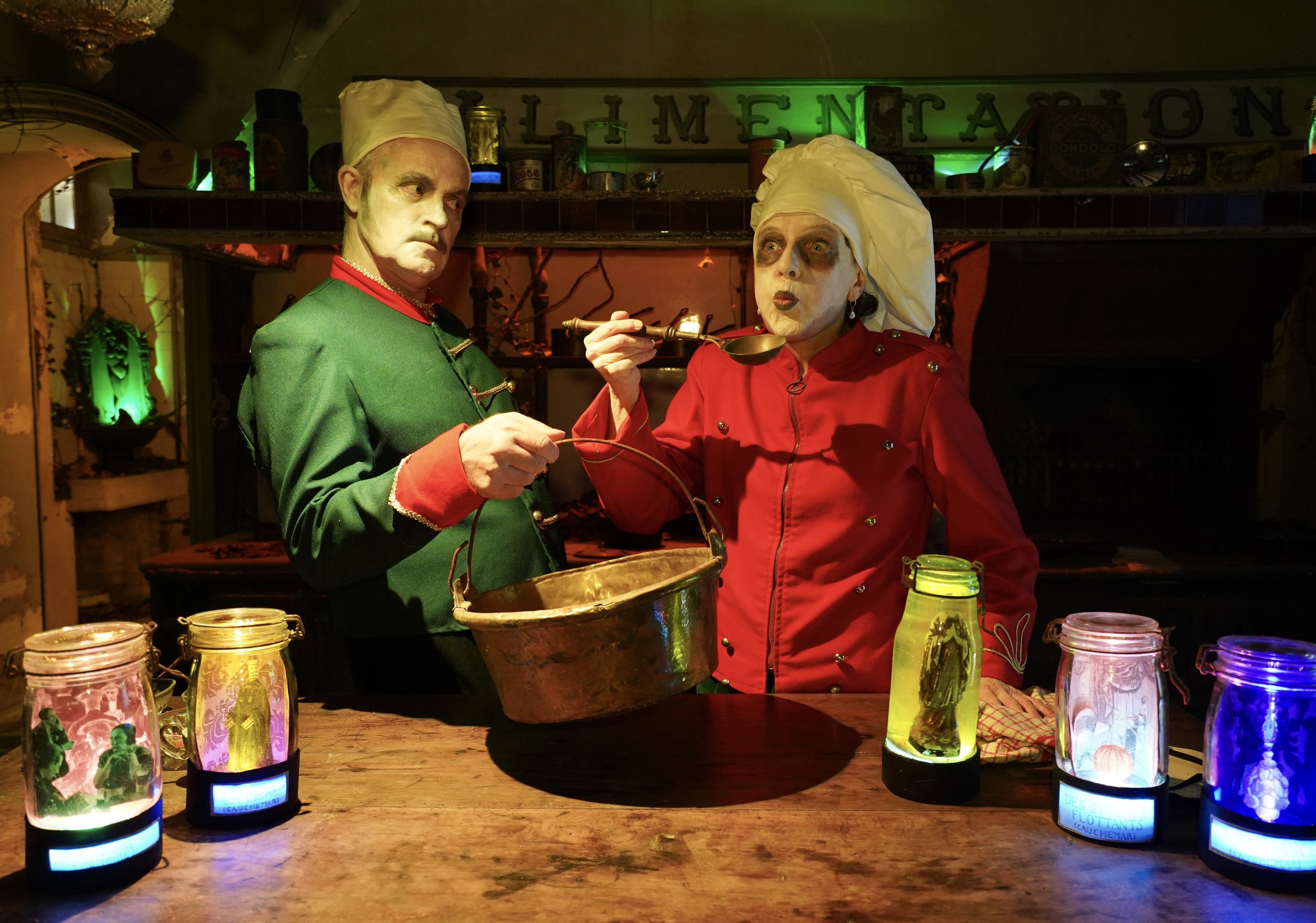
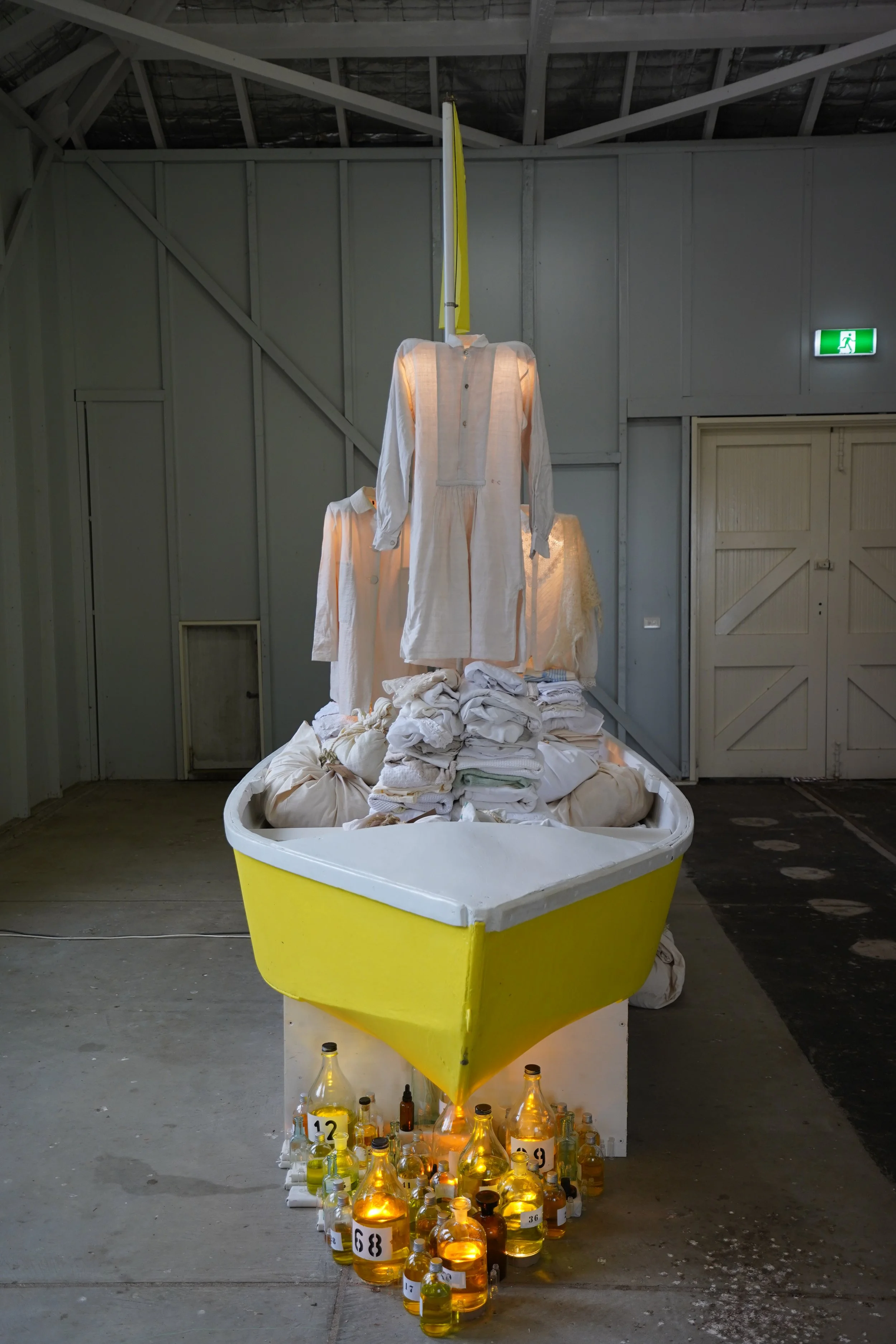
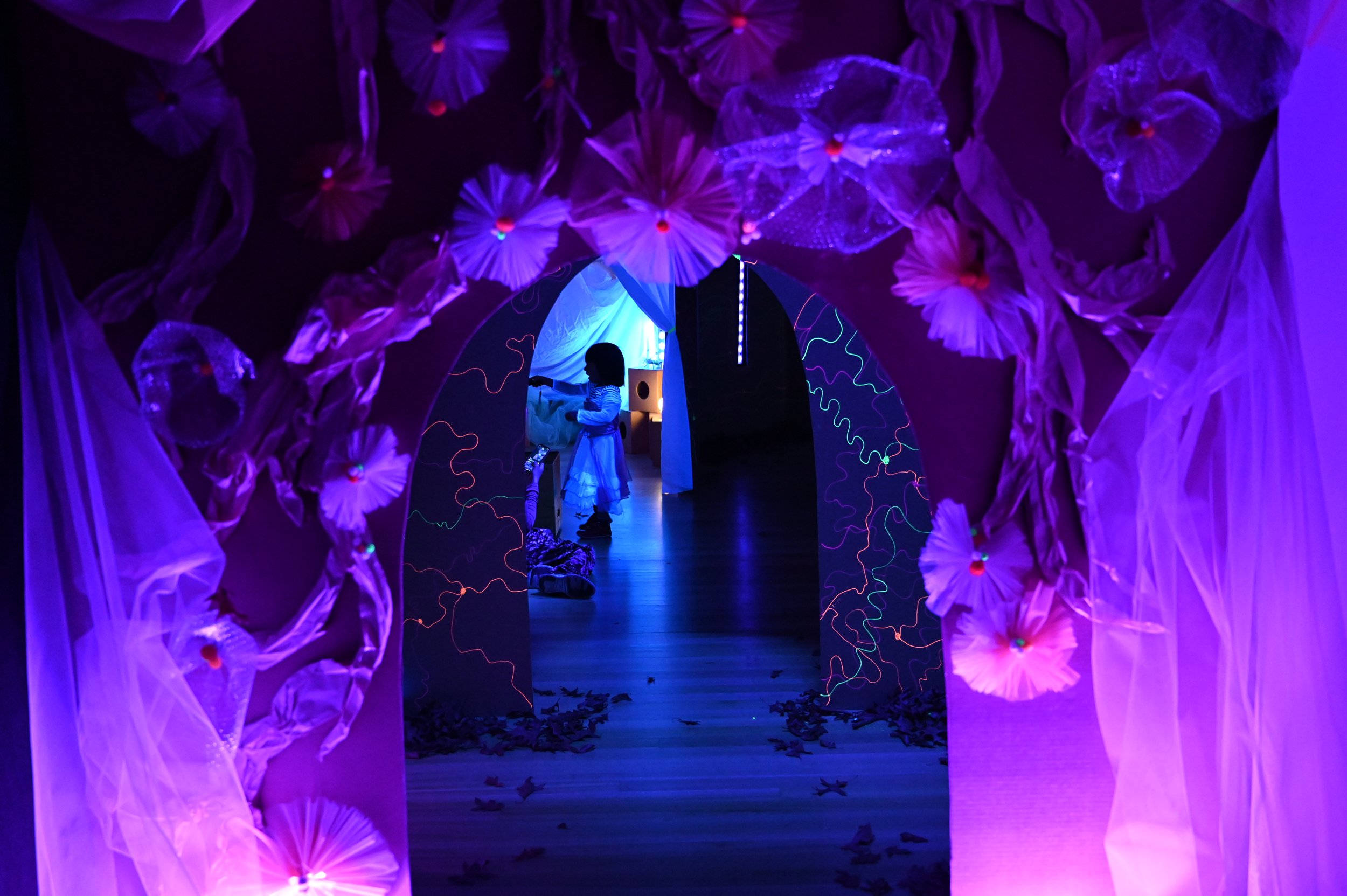
The Collector was the second iteration of Penelope Bartlau’s practice-based RMIT School of Design PhD project titled “Gasp, lean in and explore: How can Live Immersive Installation Experiences create a sense of wonder and playfulness in adults?”
CLICK HERE to read My Melbourne Arts review .
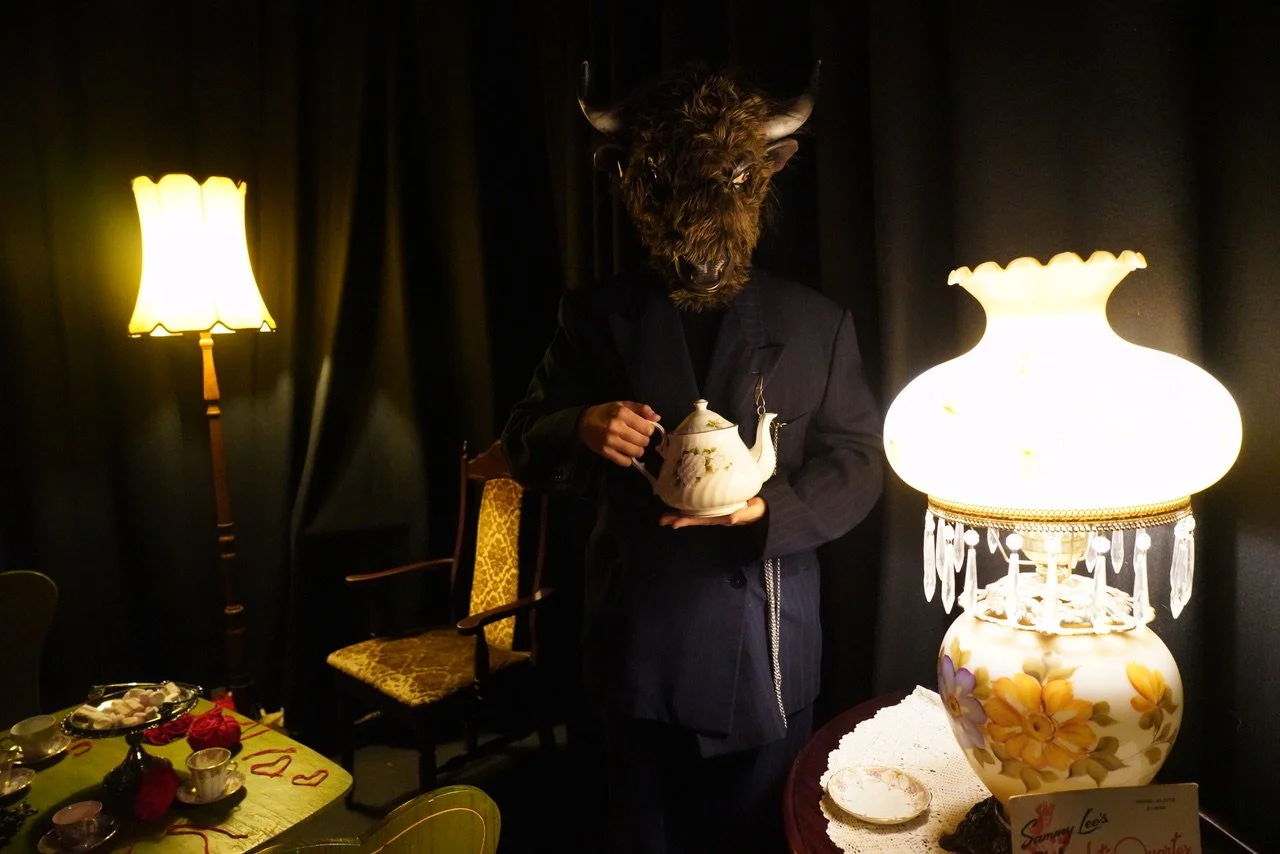
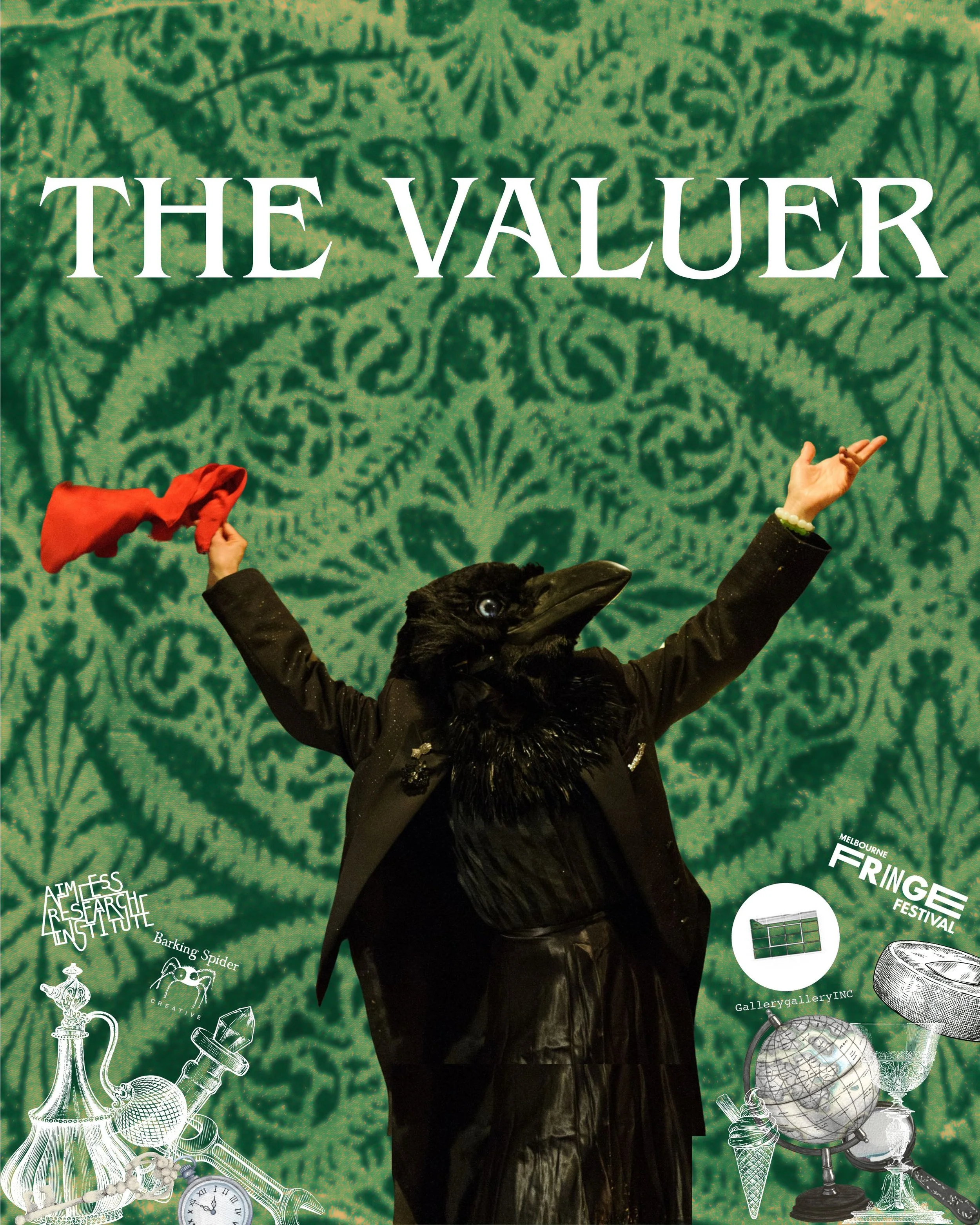
The Collector was a live, immersive installation experience set in a room belonging to the Collector, a half-human, half-raven character. Two-at-a-time, across a total of a 45-minute experience, audiences were guided to the Collector’s room, in a secret location, down a series of cobblestone alleyways in Naarm’s (Melbourne’s) Fitzroy North.
CLICK HERE to watch The Collector on Vimeo
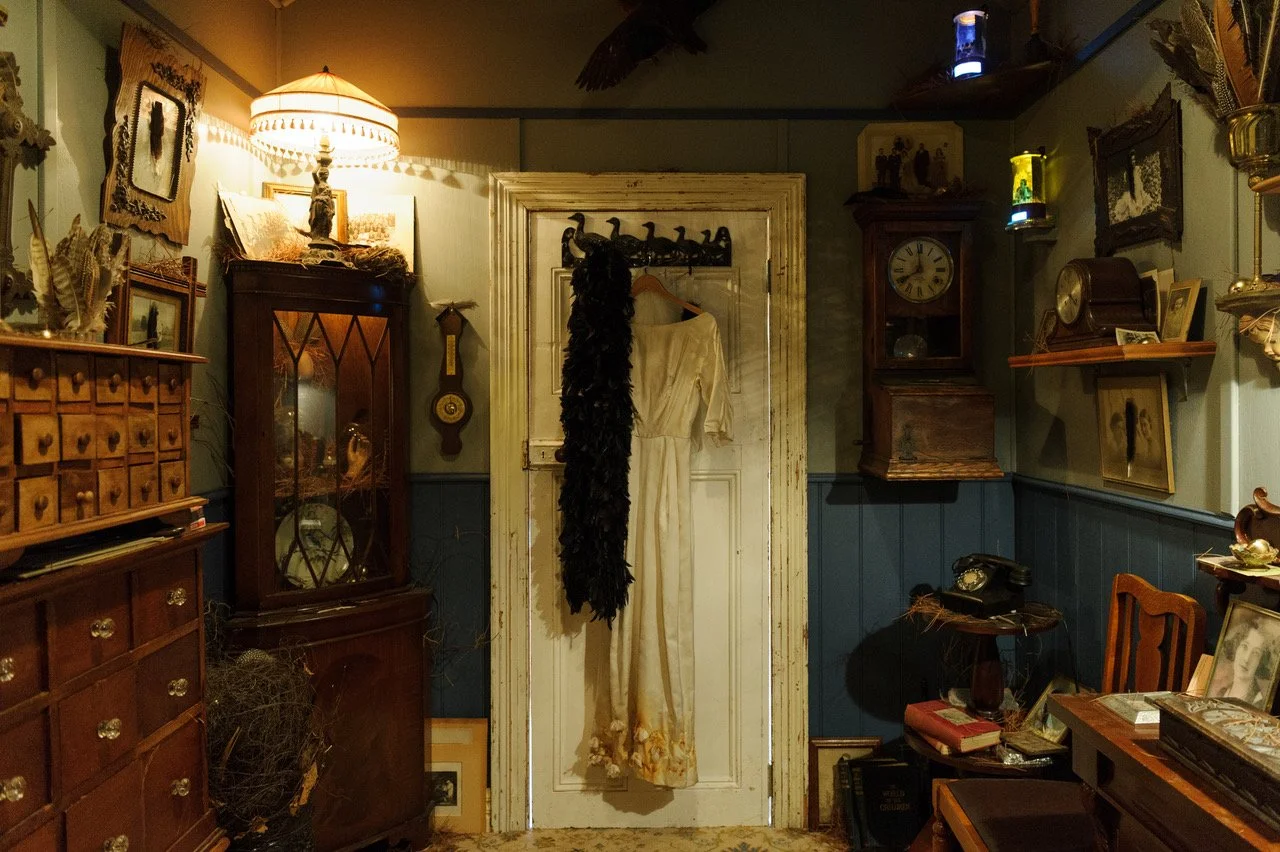
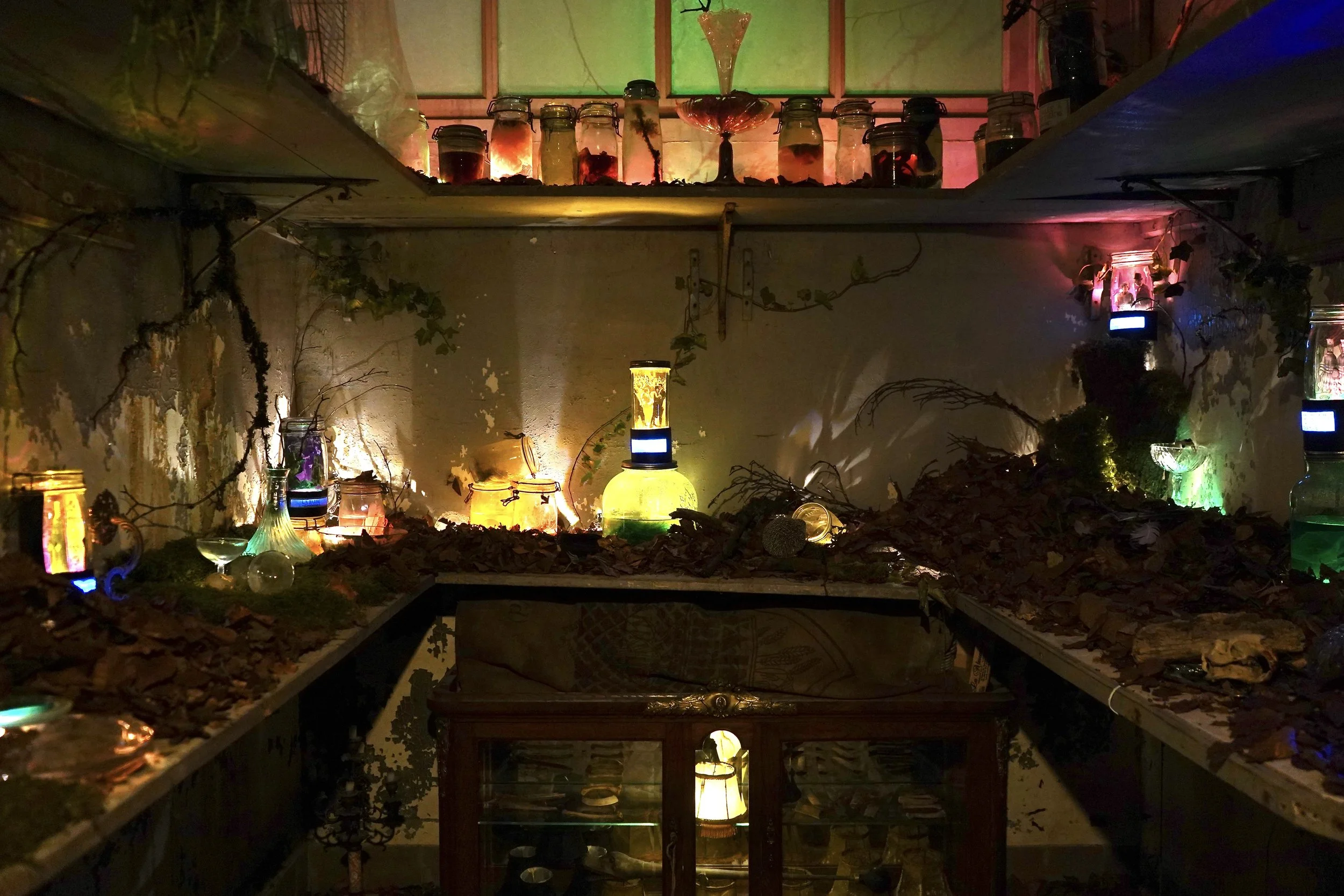
The exterior of the room appeared to be that of a small house, clad in rusting old, corrugated iron, with an antique brass ship’s bell attached to the wall, and a Victorian, white-painted wooden door with a wobbly-board mantle. This exterior was itself housed in a modern structure of fresh, new corrugated iron. Here, audience members were met by Marta and onboarded and told that once inside, the Collector may offer tea and non-vegan treats, and assured that, while moody, she would not peck nor bite. Once inside the Collector’s room, audience members were free to move objects, to poke around, and to look at and alter things, with the exception of clocks and glass jars.
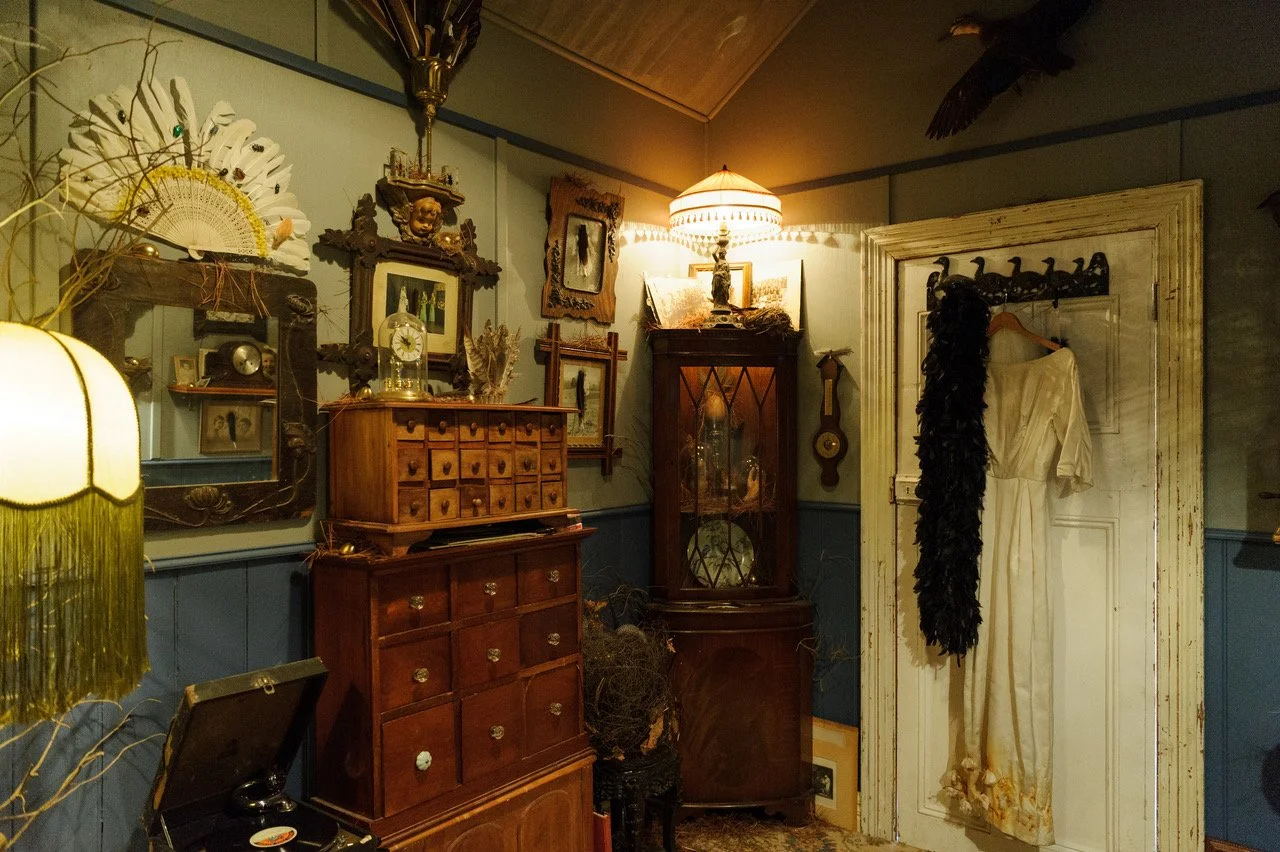
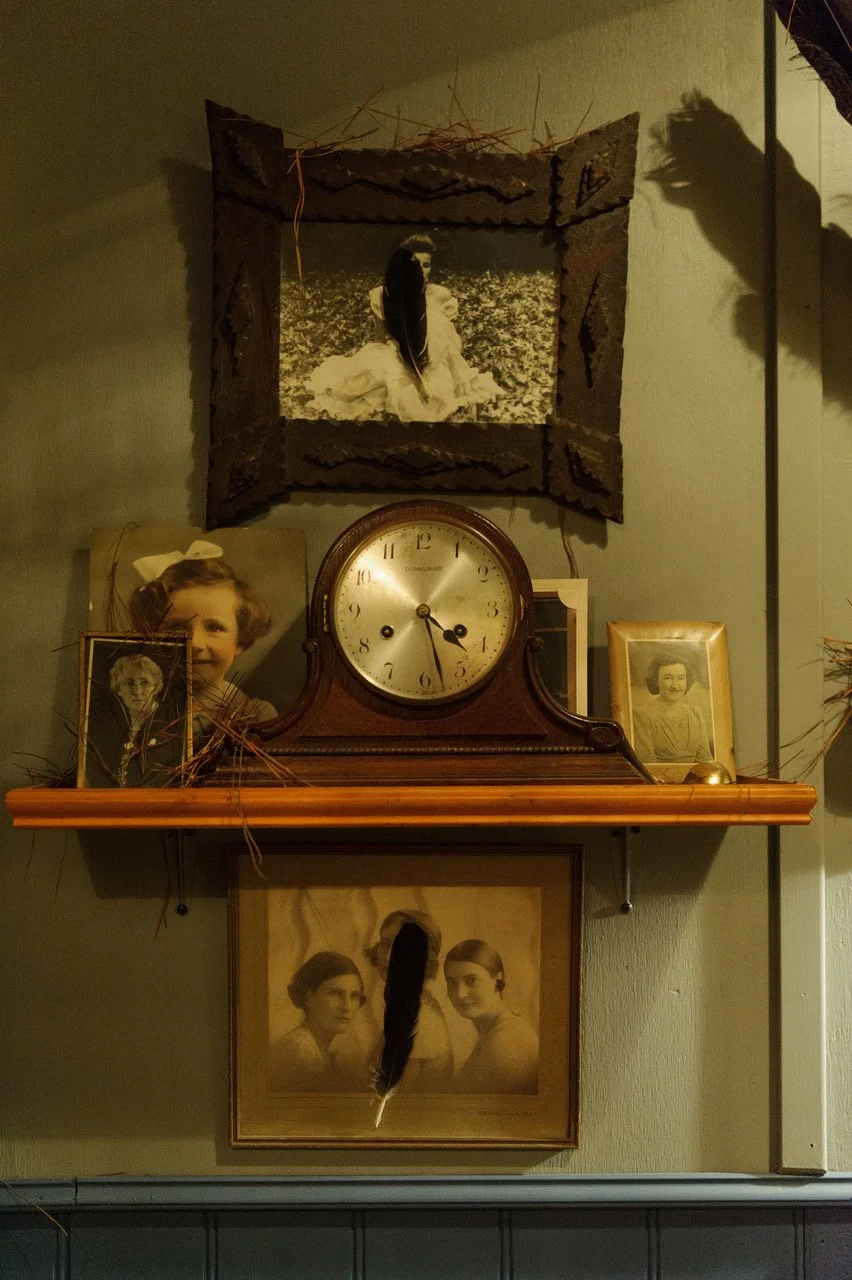
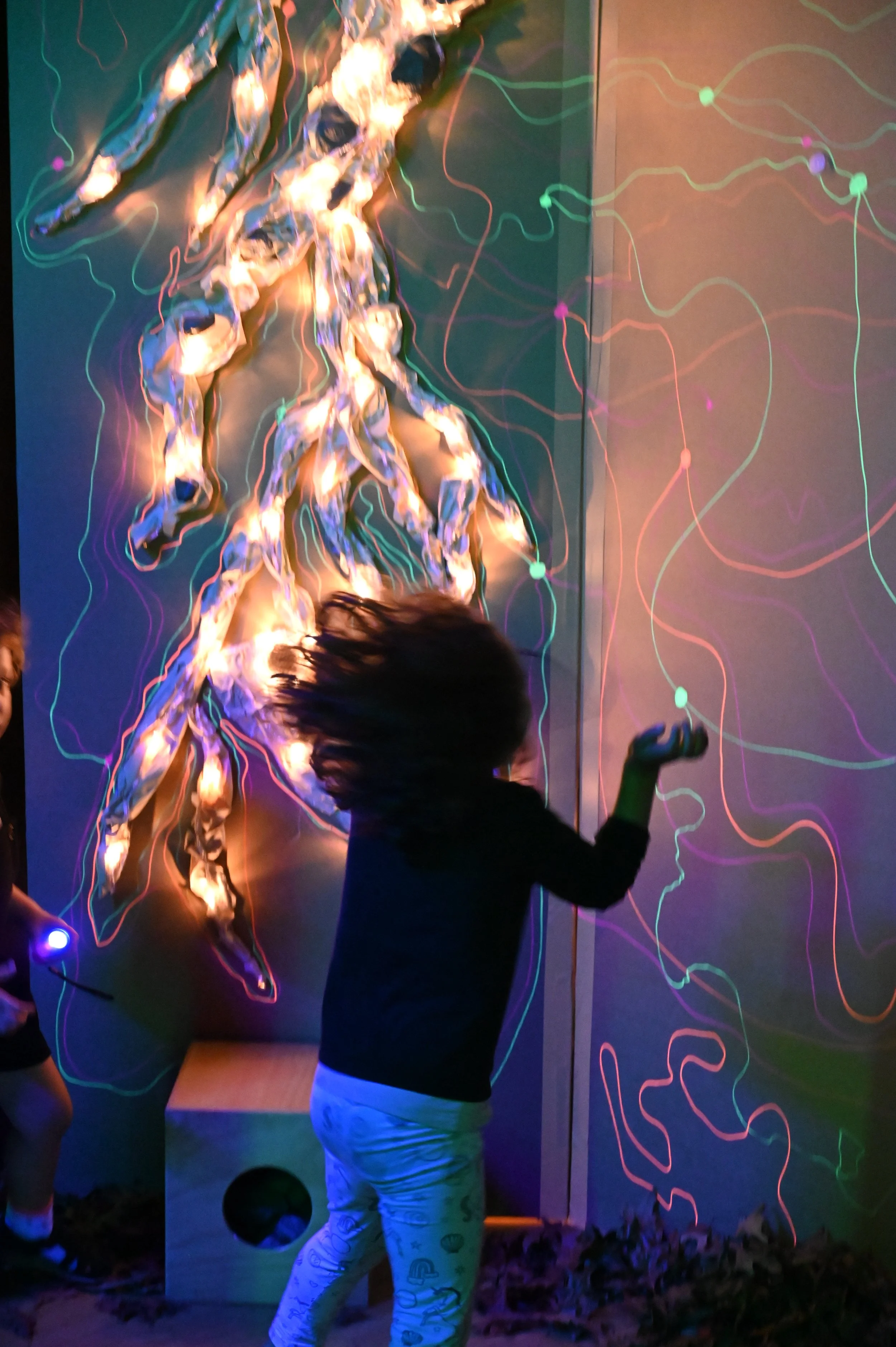
However, the Collector was not inside when the audience members entered, and they were left to their own devices to explore as they wished. Lights gradually flickered on as they investigated the space, and a vintage bakelite radio started up, playing first a poem narrated by a woman’s voice, and then a podcast. Audience members could write a hope, dream or memory on a large manila luggage tag, and read those of others, kept in drawers in the room. The Collector herself appeared after 10 minutes, manifesting through a wall, and bowing deeply to her guests. Carrying a black box with three silver and three gold snail shells, she seated herself in an antique, black-upholstered Victorian balloon-backed chair, inviting and encouraging her guests to join her at a small inlaid wooden table for tea and chocolates. Together, the three then played a game of noughts-and-crosses using the snail shells in a handmade frame out of sticks. Then, the Collector shifted the game rules to no rules, as together they transformed the snail-shells and frame into a miniature tabletop installation with additions of feathers, pine needles, and whatever the audience members chose from around the room.
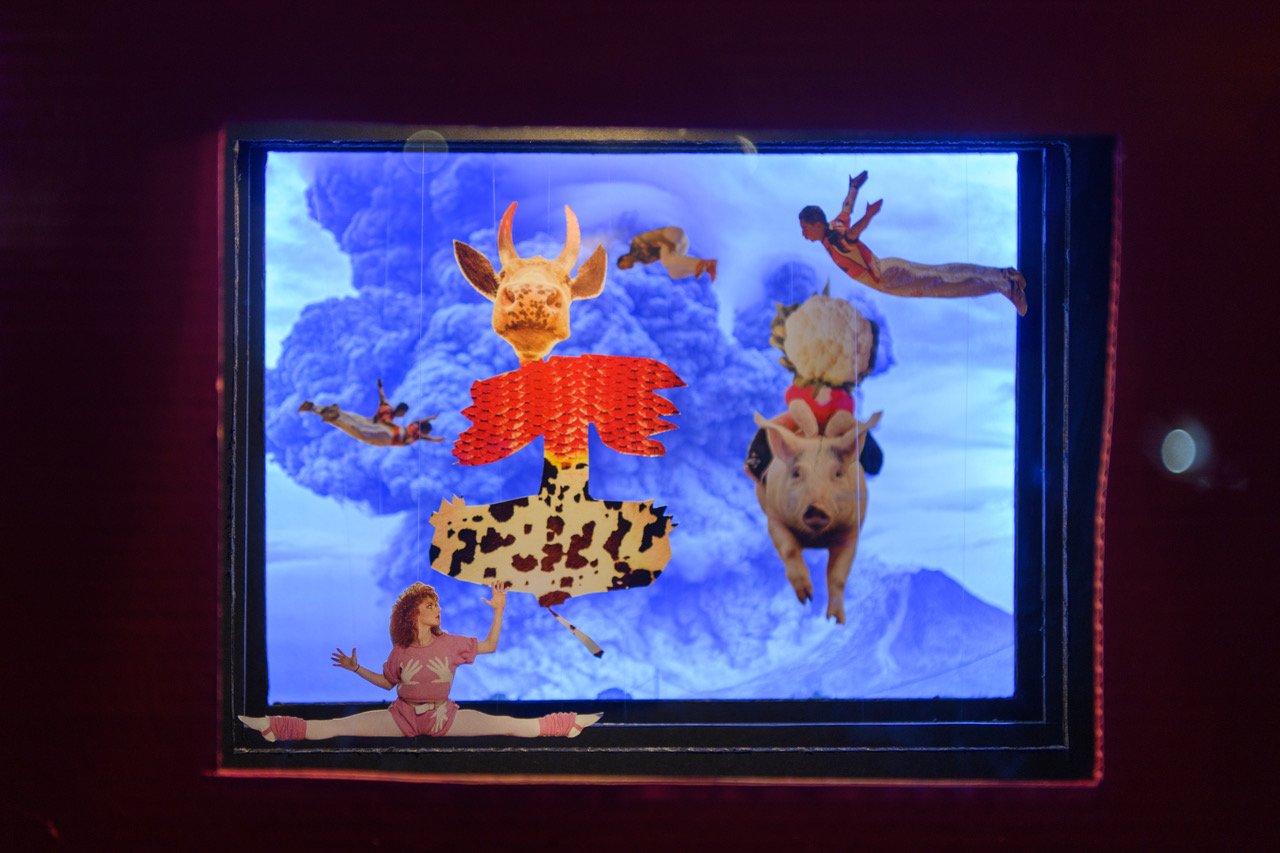
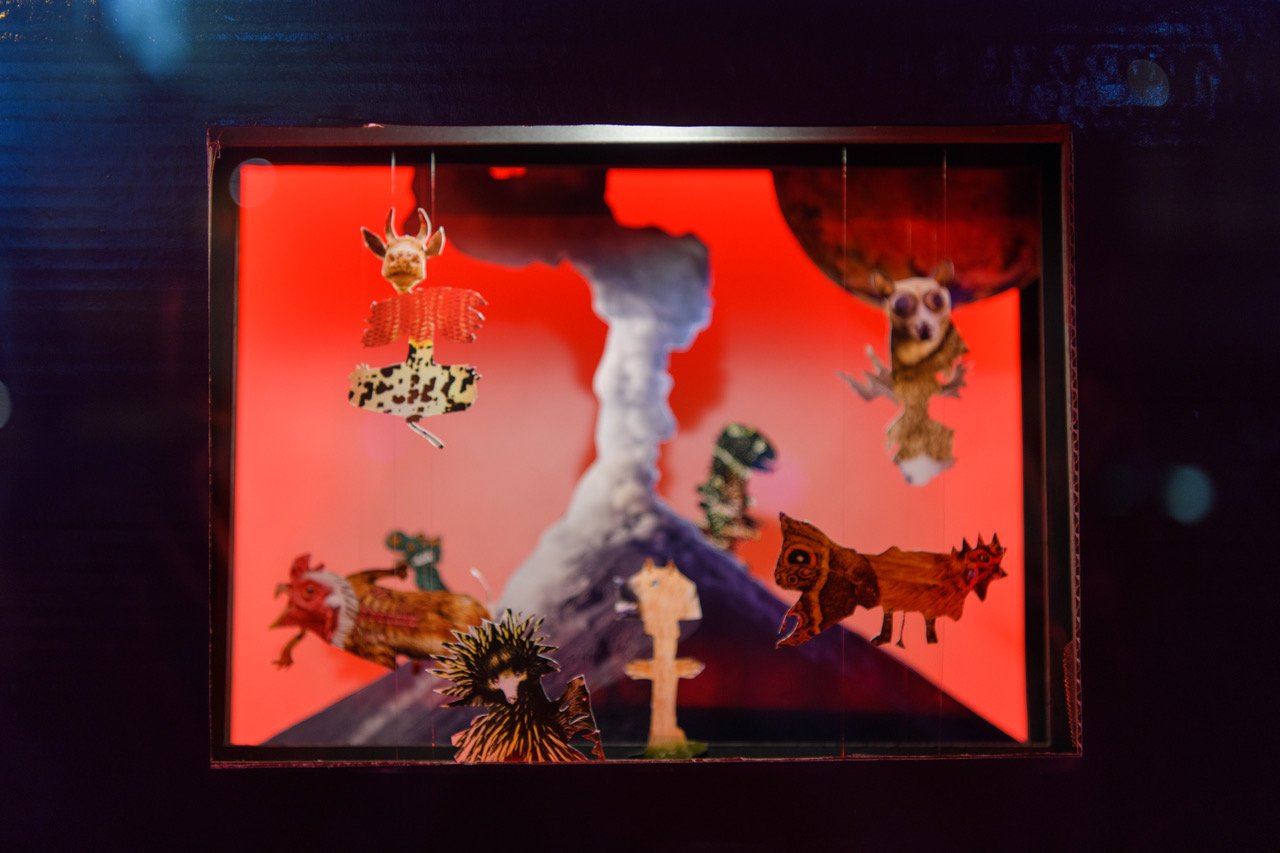
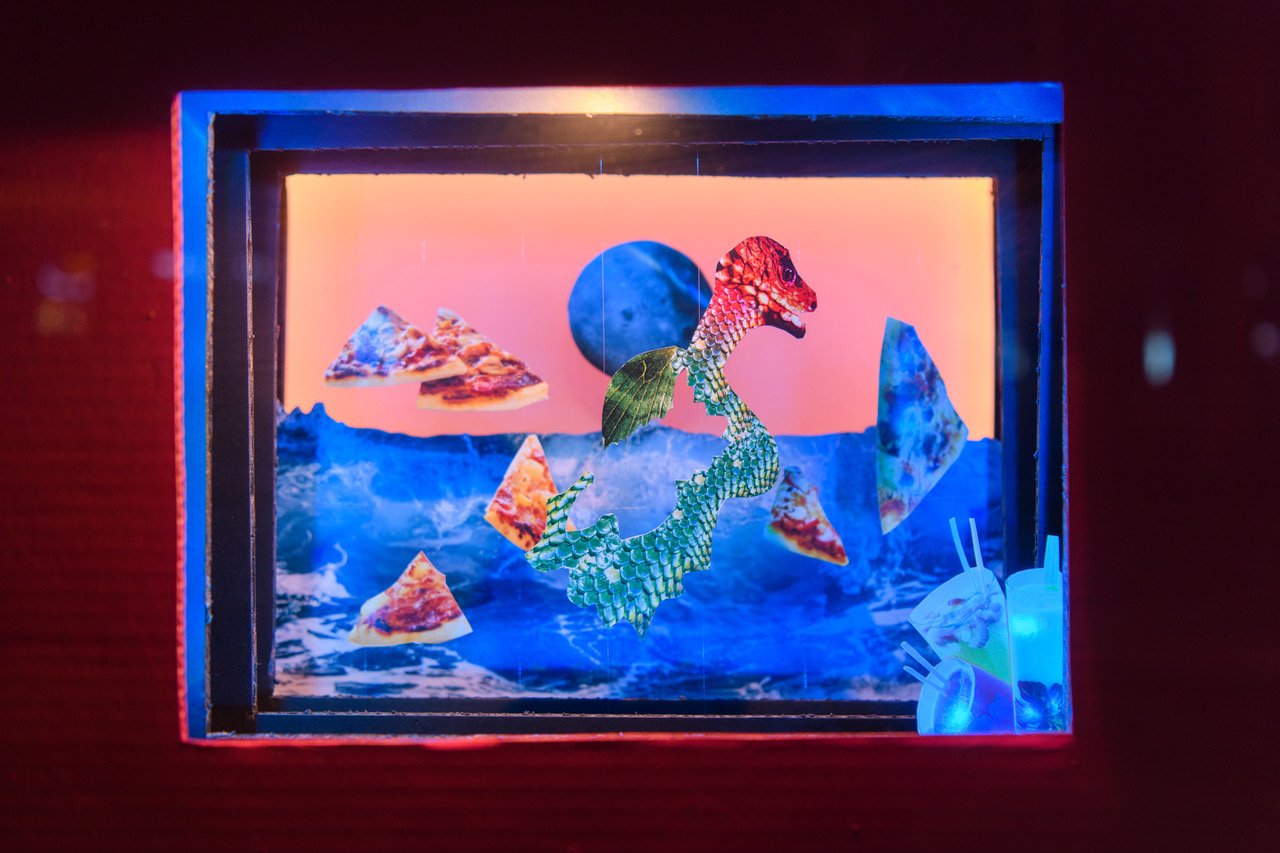
After the tabletop installation, as the Collector returned the snail shells to their black box, a 1940’s black bakelite telephone rang from the opposite side of the room. One participant answered, and the Collector’s “Caretaker” instructed the audience members that it was ”feeding time”. In a small, black wooden cupboard suspended on the wall through which the Collector had arrived, the Caretaker guided audience members to open the cupboard doors.
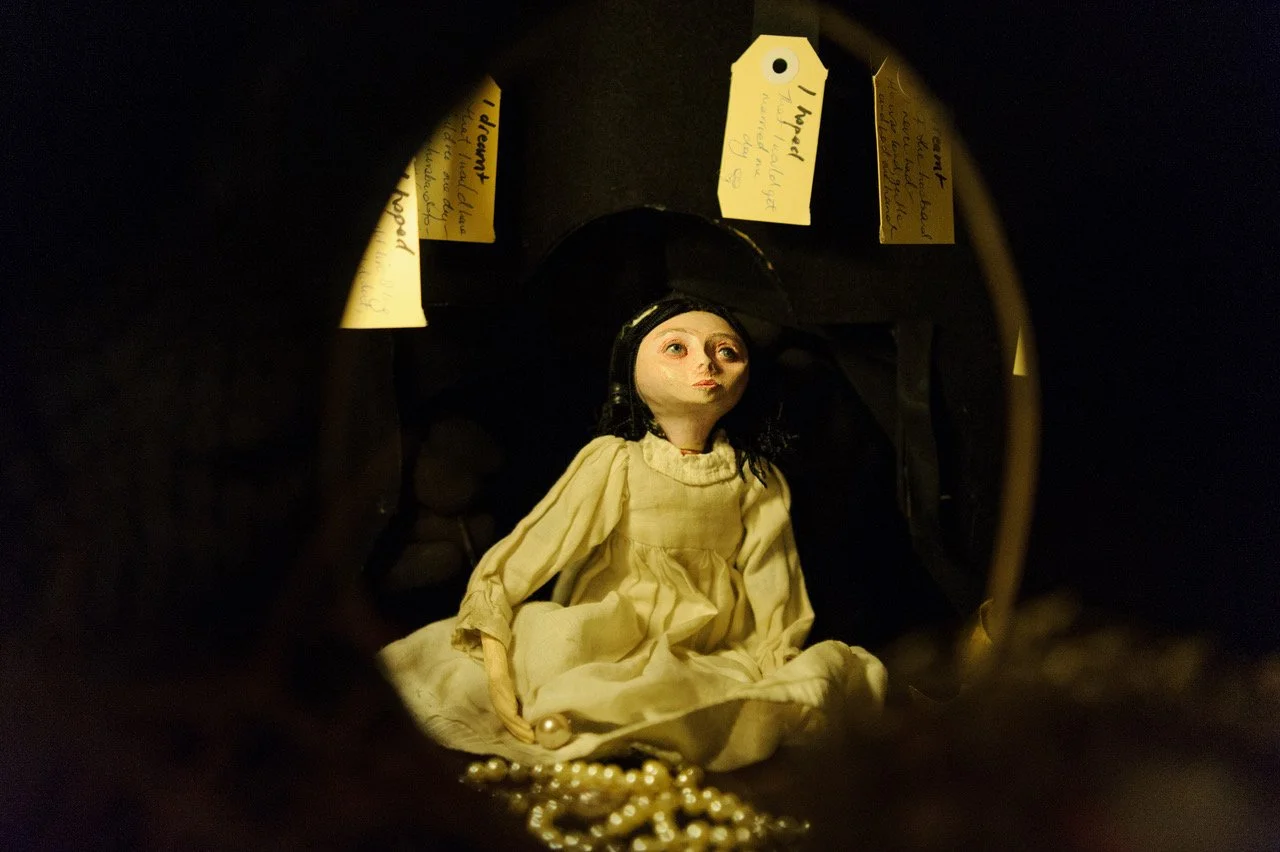
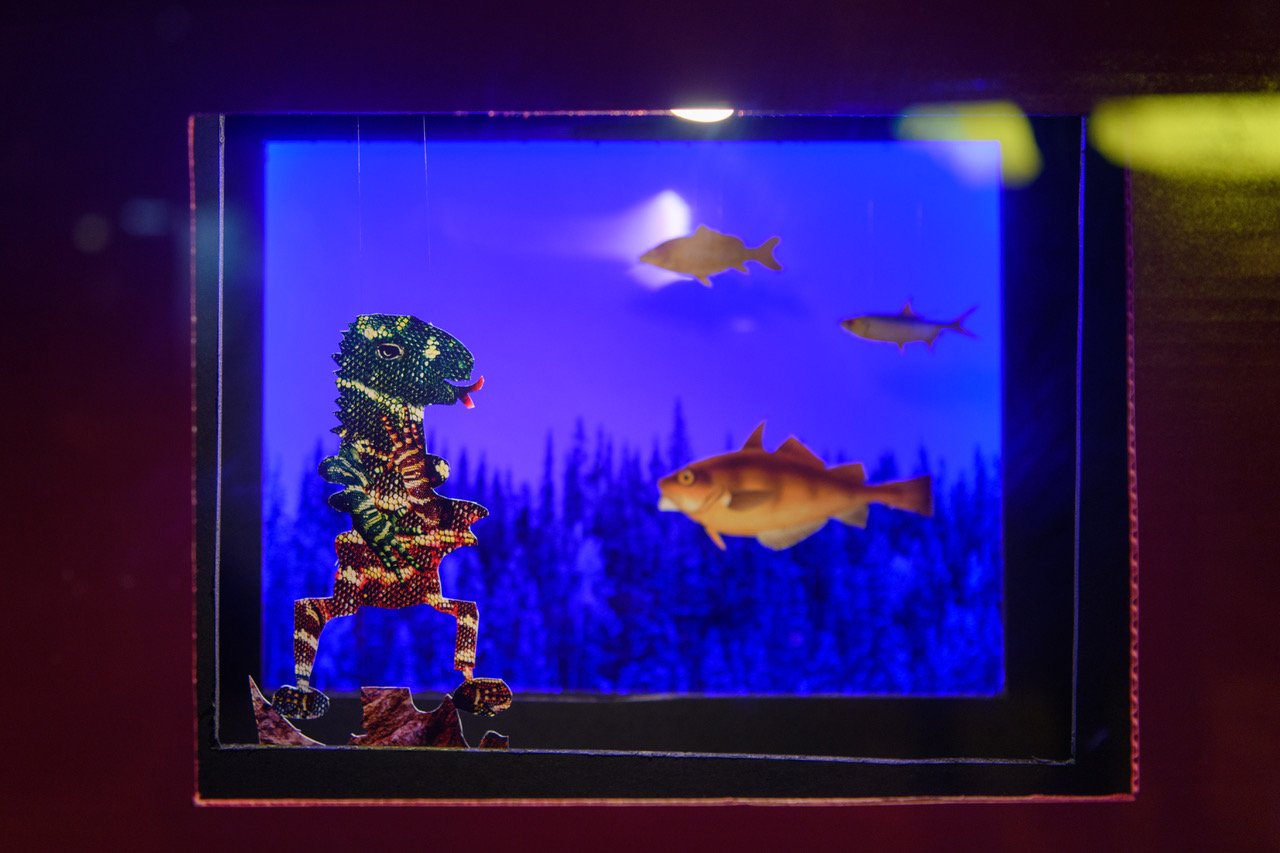
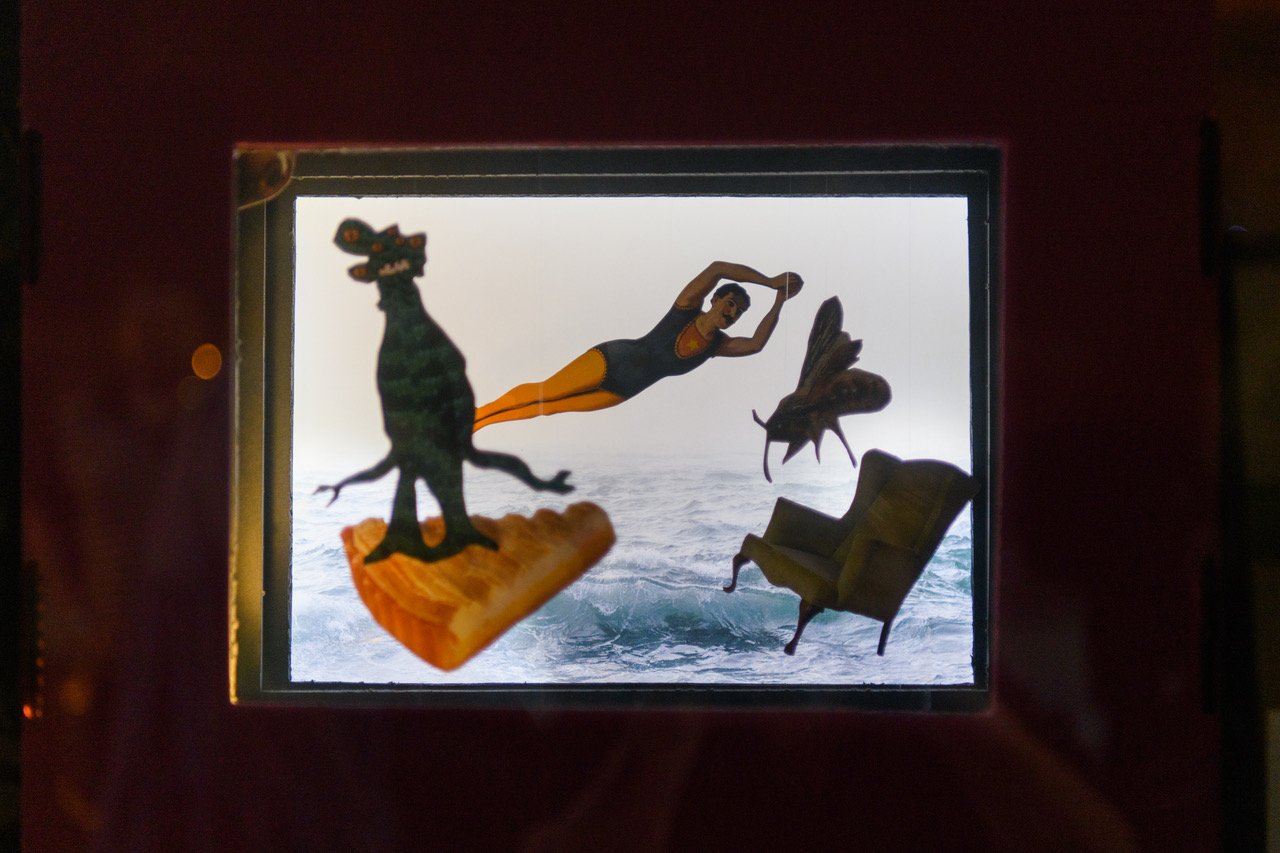
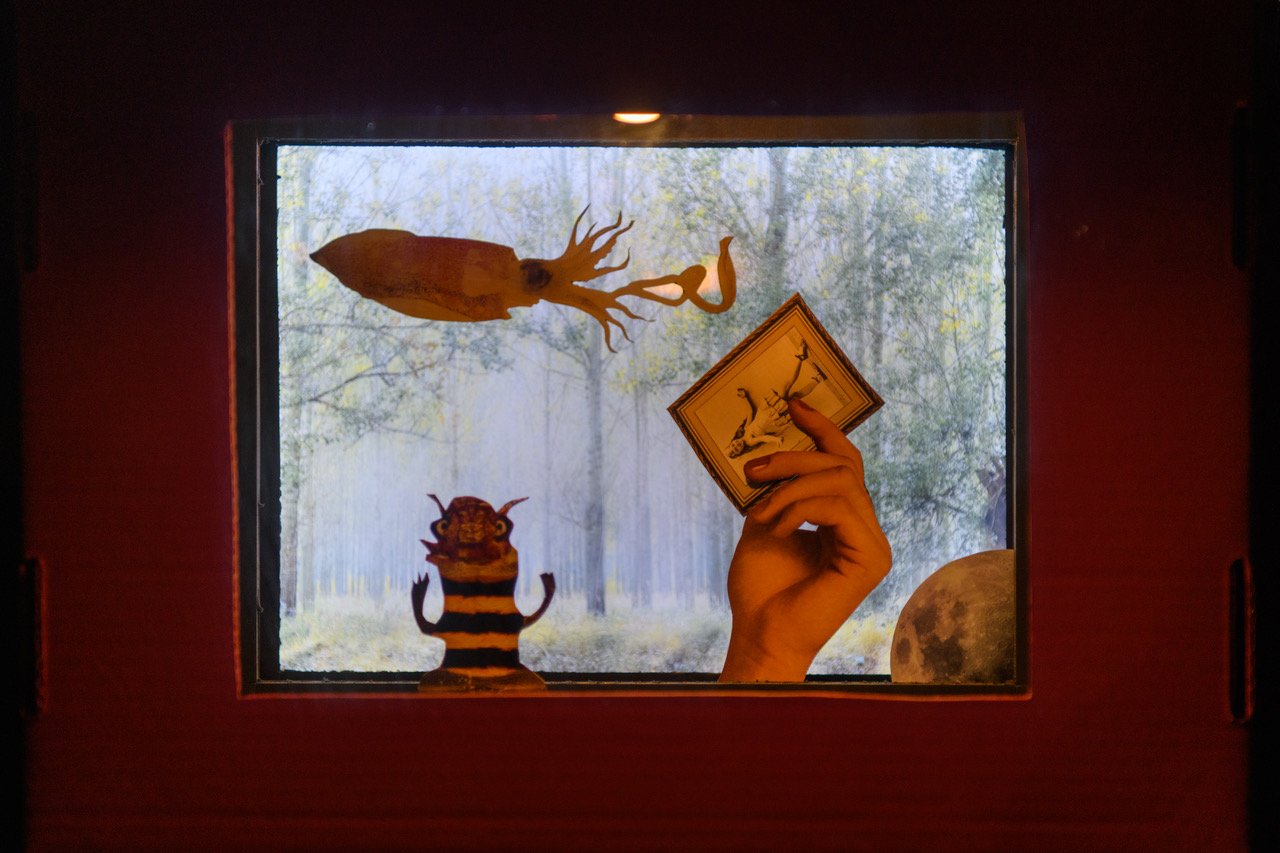
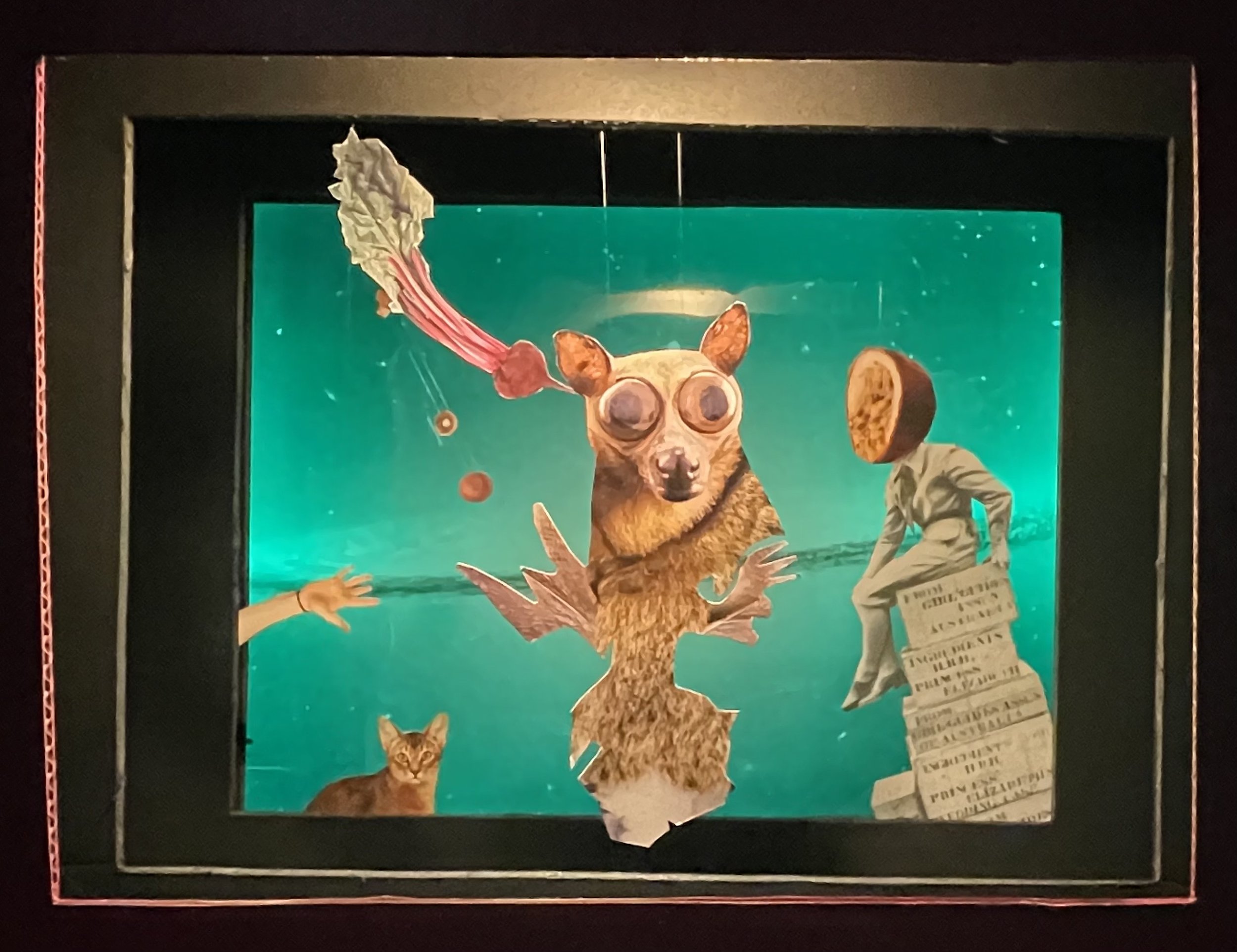
Previously, inside this cupboard was an installation with a nest in a small dead tree branch, and broken golden eggshells all around, with a broken golden eggshell and a pearl at the heart. Now, at the centre of the cupboard, a portal had opened to reveal a child (puppet) in a white Victorian nightgown, sitting in a miniature black room, surrounded by pearls on the ground and suspended, small manila luggage tags, upon which was written the child’s hopes, dreams and memories. From the audience, the child begged for something. The Caretaker instructed audience members to take three large pearls from a brass plate to the right of the cupboard, and feed these through a brass hole just above. The pearls then appeared in front of the puppet, as if by magic.
While this was taking place, and the audience was distracted with the puppet, the Collector was unlocking a vintage 1940s gramophone and preparing for the next part of the experience. Just as the last of the pearls arrived at the puppet child, the gramophone started up with an upbeat rendition of “Funeral March of a Marionette” by Charles Gounod, and the Collector began dancing. The Collector offered each audience member a silk scarf, and in all but one case, the audience members joined in together in a free, fun, playful dance with the Collector. At the finish of the dance, it was time for the collector to retreat back through her wall from which she had arrived. The audience members were left for approximately another five minutes to keep exploring the space, knowing when to leave at the toll of the exterior bell.
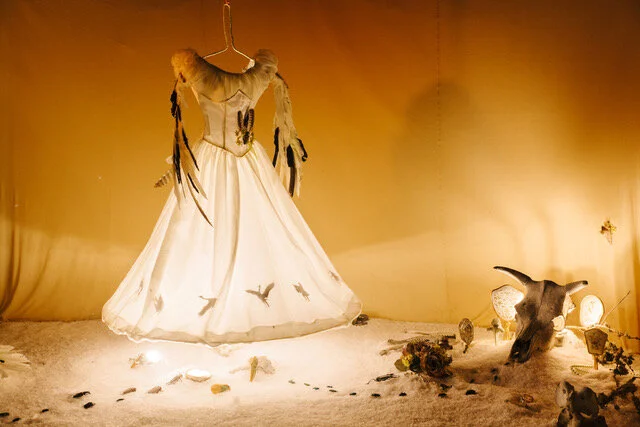
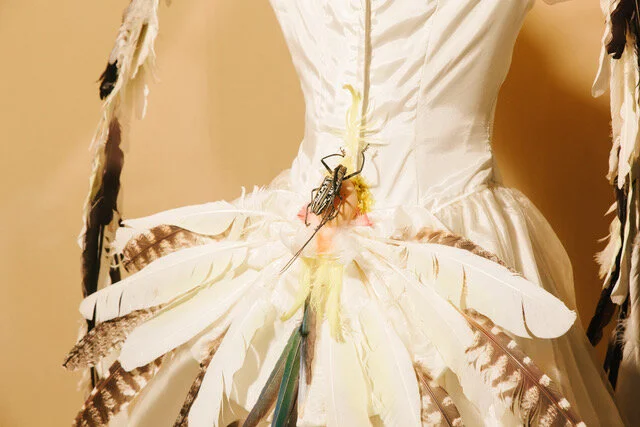
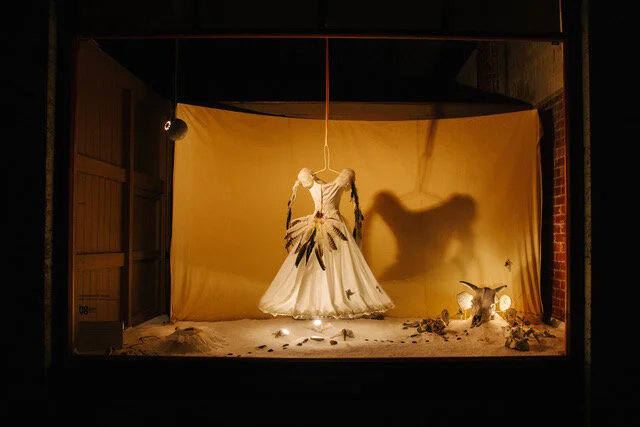
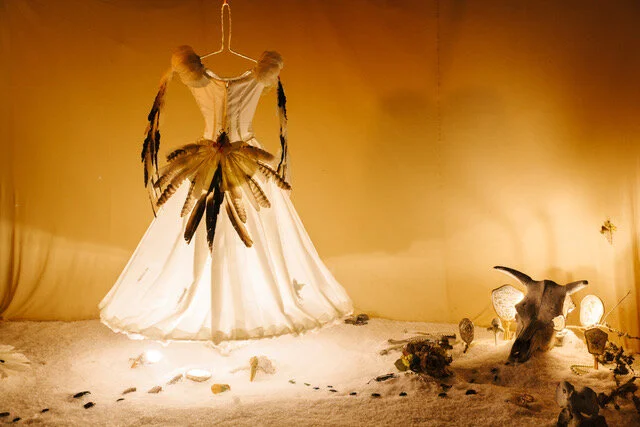
The Collector was constructed using theatre set-building techniques and was a complete, stand-alone unit. Assemblage elements had been collected from op-shops, from items from our home, from friends, and from my (Penelope’s) mother’s estate. The Collector installation had a late Victorian bricolage aesthetic with some contemporary additions (eg the Collector’s collection of plastic bread tags and bottle caps). Assemblage elements were drawn from a liminal and Wunderkammer aesthetic inspired to create wonder in adults.
Credits
Penelope Bartlau - PhD Candidate, director, experience designer & design assemblage, writer and performer.
Jason Lehane - Set design & construction, lighting design, tech wrangling and puppeteer.
Pratyay Raha - Sound designer & composer.
Cinda Manins – Mask dresser.
Marta Gustinucci – Performer (onboarding).
Sulejman Dzeka – Voice performer (the Caretaker).
Dashiel Agar and Penelope Bartlau - Voice over artists.
Karen Ng - Production & ticketing manager.
Zoe Broxton – Work experience & assistant stage manager.
Dashiel Agar, Cinda Manins and Clare Leporati - Survey whizzes.
Sarah Walker - Photography.
Klari Agar and Penelope Bartlau - Videography.
Thanks to PhD Supervisors Troy Innocent and Clare McCracken
This work was created on lands of the the Wurundjeri Woi-Wurrung and Boon Wurrung peoples of the Kulin Nation. We offer our thanks and respect to the traditional owners and original storytellers of this land and extend this respect to elders past and present. Always was, always will be.